%201-1.avif)
Apple Watch vs Circular Ring 2: A Side-by-Side Comparison After Wearing Both
I wore the Apple Watch Series 11 and the Circular Ring 2 at the same time for 30 days and nights. I ran with both, slept with both, and checked both against a Polar H10 chest strap during rest, steady runs, and weightlifting. Here's what I learned, including the places where each device honestly loses. They're usually framed as rivals, but they're solving different problems. One is a tiny computer that also tracks health. The other is a dedicated health sensor you wear on a finger. The right pick depends on which problem you're actually trying to solve.
Specs Comparison
In het kort
- Get the Apple Watch if you want a second screen for your iPhone, live pace and heart-rate during a run, built-in GPS, and notification handling on your wrist.
- Get the Circular Ring 2 if you want to understand your sleep, recovery, and long-term health trends, and you'd rather not wear a screen to bed.
Apple Watch vs Circular Ring 2: Design and Comfort
Winner: Circular Ring 2
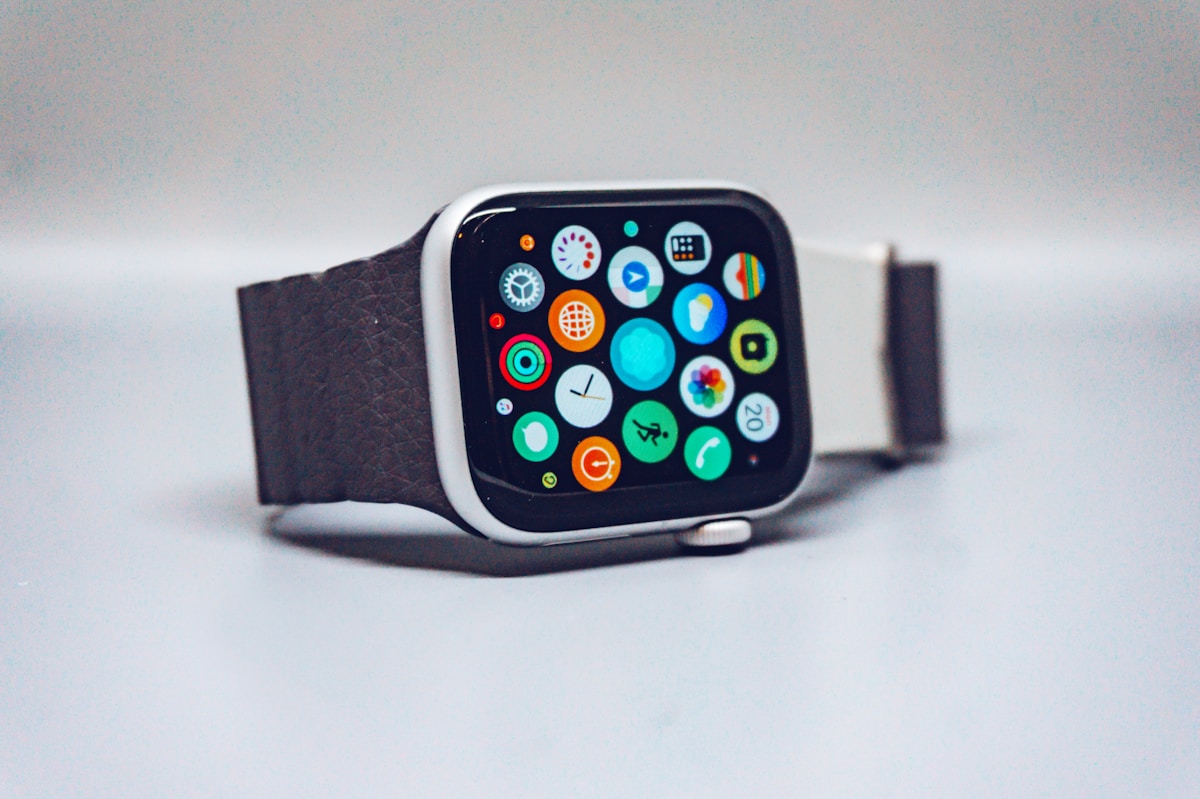
The Apple Watch Series 11 is 9.7 mm thick and weighs between 29.7 and 43.1 grams depending on case size and material. You feel it when you type, when you sleep on your side, and when you slide a jacket over it. It's a noticeable object on your wrist, and that's fine for a device you put on in the morning and take off at night.
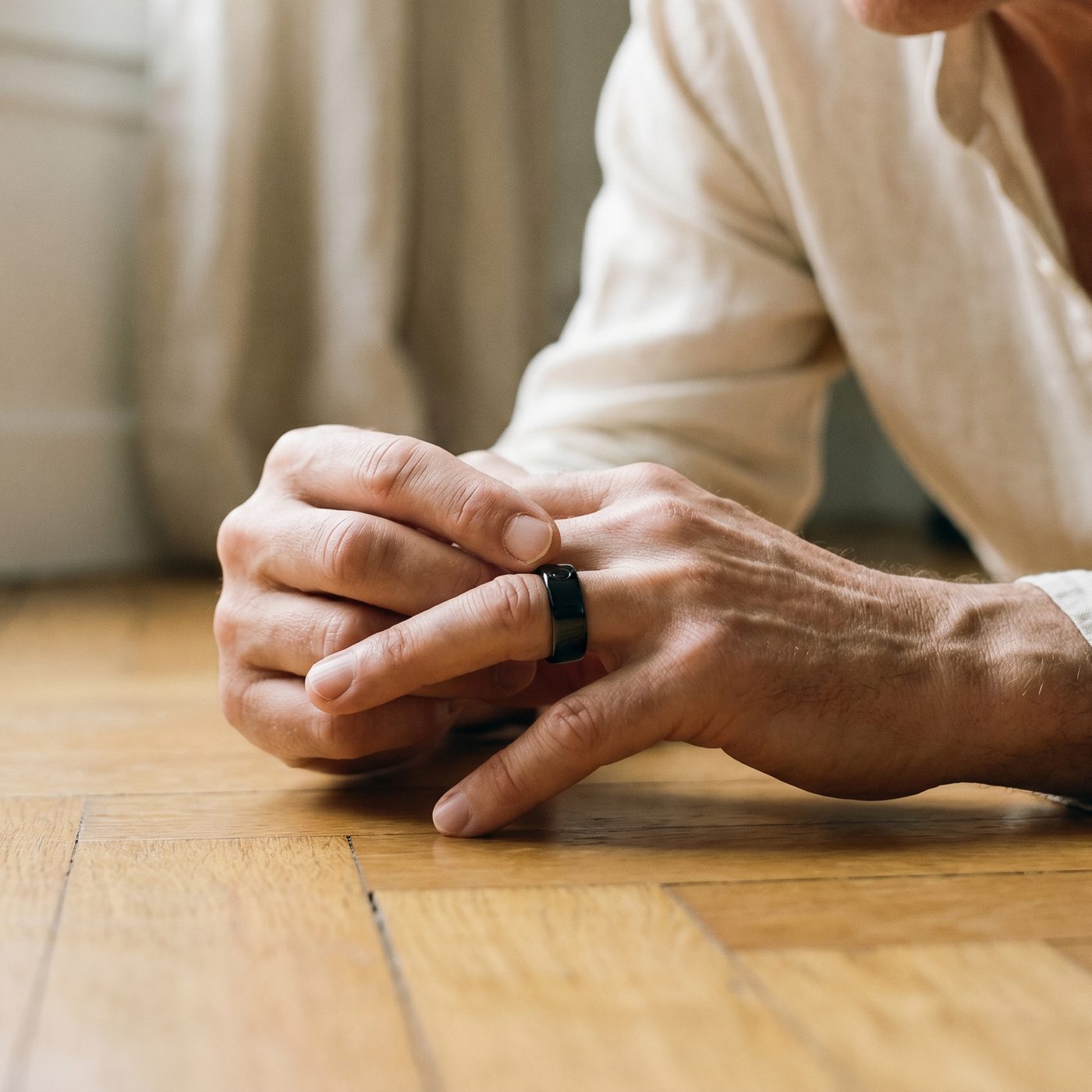
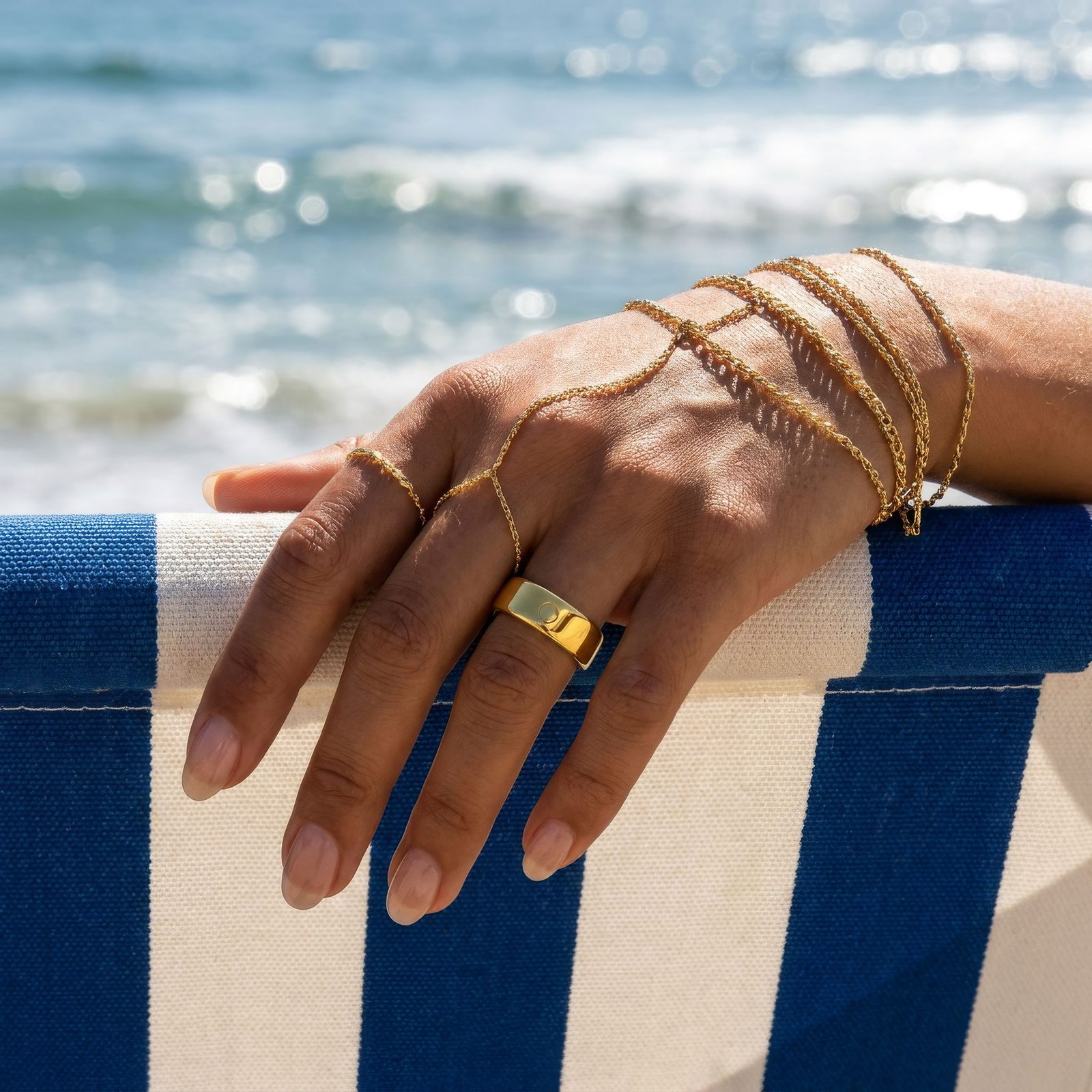
The Circular Ring 2 weighs 2 to 3 grams and is 2.8 mm thin. By day three I stopped noticing it entirely. It disappears the way a plain ring disappears, which is the whole point: a health sensor you never have to think about.
For sleep the gap is bigger. I found the Apple Watch uncomfortable to sleep in, a 30-gram block pressing into the mattress. I never had that problem with the ring. If overnight wear is your priority, the ring's form factor is the single biggest advantage in this comparison.
One more thing on fit: Circular ships with a digital sizing kit, so you confirm your exact size before the ring arrives. "Will it fit?" is the top worry when buying a ring sight unseen, and it's the one question a watch never raises.
Apple Watch vs Circular Ring 2: Sleep Tracking
Winner: Circular Ring 2
Let me correct a common misconception first: the Apple Watch does track sleep natively. It's shipped a Sleep app since watchOS 7 and added sleep-stage tracking, including REM (rapid eye movement) sleep, with watchOS 9, plus a Sleep score on recent models. You don't need a third-party app anymore.
The real limitation isn't the software, it's the battery. The watch needs charging daily, and most people charge it overnight, which means zero sleep data on those nights. A device you take off to charge is a device that misses the exact hours you care about most.
The Circular Ring 2 records sleep stages, HRV (heart rate variability), continuous SpO2 (blood oxygen saturation), respiratory rate, and body temperature every night, because you never take it off. Over 30 nights I watched my resting heart rate drift from 62 down to 58 BPM (beats per minute), and my HRV climb from 48 to 54 ms. That kind of trend data is nearly impossible to collect with a device you forget to wear back every night.
One detail worth explaining: the finger sits closer to core blood flow than the wrist, so finger temperature tracks your internal temperature more faithfully and is less thrown off by ambient air. That's the mechanism behind the ring's edge on overnight temperature and cycle tracking, and it matters more than most people realize.
The ring also has a Smart Alarm: you set a wake window, and it triggers your phone's alarm during your lightest sleep phase inside that window, so you wake up feeling less groggy. The ring itself doesn't vibrate; the alarm plays from your phone. The Apple Watch has a standard alarm that buzzes at the exact time you set, regardless of where you are in a sleep cycle.
Apple Watch vs Circular Ring 2: Heart Health
Winner: Apple Watch
Both devices run a single-lead ECG for AFib (atrial fibrillation) screening. The Apple Watch asks you to hold the digital crown for 30 seconds. The Circular Ring 2 asks you to rest a finger from your opposite hand on the ring for 40 seconds. Both are spot checks, and both check for the irregular rhythm that can signal AFib. Circular's ECG is powered by an FDA-cleared algorithm.
I compared both against a Polar H10 chest strap during rest, steady running, and weightlifting. Both matched the strap within 1-2 BPM, so for heart-rate accuracy I couldn't separate them.
I'd still give the watch the edge here, and not because of hardware. It has years of third-party validation behind it, a hypertension-notification feature on Series 11, and a wider ecosystem of heart-health studies. The ring's advantage is different: it samples your heart rate every 2 minutes around the clock, so it builds a denser baseline for trend detection. The watch is the better spot-check tool; the ring is the better trend tool.
Apple Watch vs Circular Ring 2: Fitness and Workouts
Winner: Apple Watch
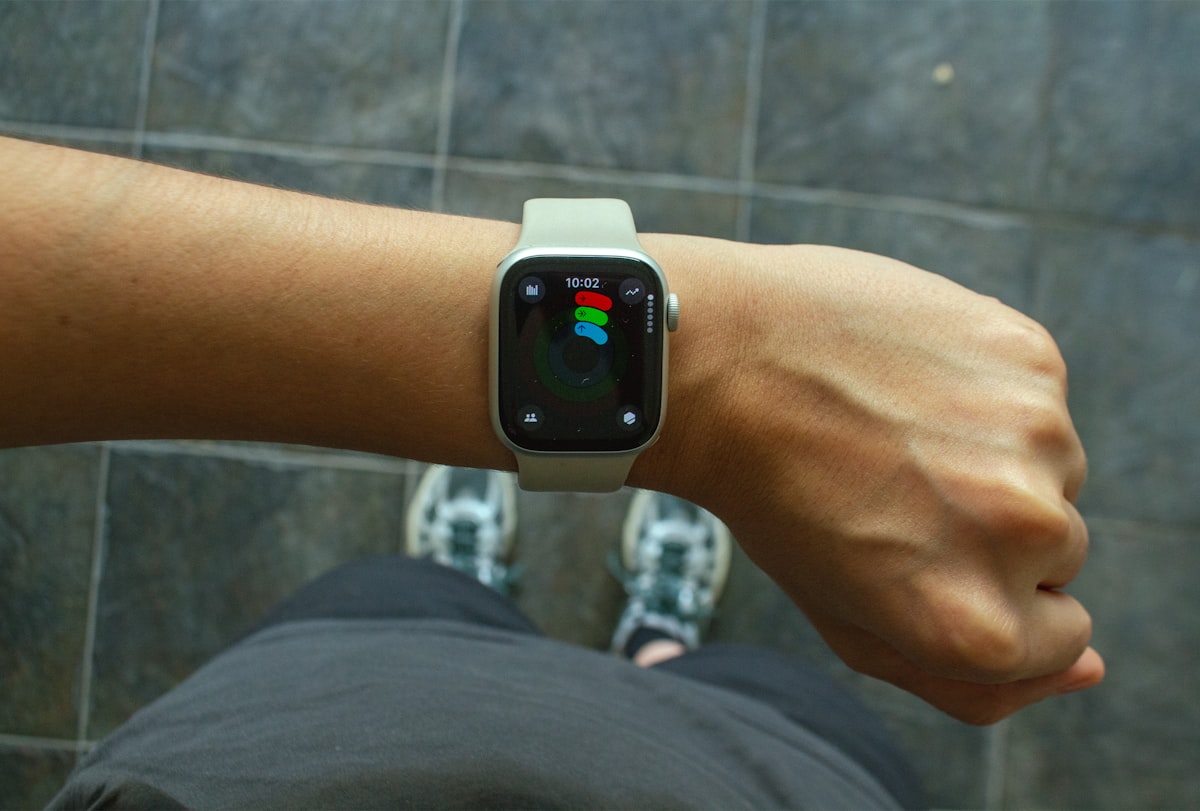
This is the category the Apple Watch was built for, and it's not close. A bright OLED screen shows pace, distance, heart rate, and calories in real time during a run. Built-in GPS means you can leave your phone at home. It auto-detects running, walking, and cycling, and supports dozens of workout types.
The Circular Ring 2 has 50+ sport modes and can log routes, distance, and pace by pulling GPS from your phone, but it has no screen. You can't glance at your stats mid-run; you check them on your phone after. For live workout data and phone-free GPS, the watch wins cleanly. If you're fine reviewing your session afterward, the ring does the job.
Apple Watch vs Circular Ring 2: Smart Features and Notifications
Winner: Apple Watch
The Apple Watch is a second screen for your iPhone. It mirrors notifications, answers calls, replies to messages, shows your calendar, and controls music. It's a communication device first and a health tracker second.
The Circular Ring 2 has no screen and no notifications. It's a health sensor first, and nothing else. That's a design choice, not a defect. Which one is better depends on whether you want more screen time or less.
Apple Watch vs Circular Ring 2: Data and App Experience
Winner: Circular Ring 2
Apple Health is genuinely powerful. It aggregates steps, heart rate, sleep, cycle tracking, and more, and it's grown real intelligence: the Trends feature surfaces long-term changes, and the Vitals app flags overnight metrics that fall outside your normal range. Series 11 even adds hypertension notifications.
Where it falls short is narrative. Apple Health hands you the data and mostly leaves you to interpret it. The Circular app does the opposite: every morning it gives a single report on sleep, recovery, heart rate, SpO2, and temperature, then hands the numbers to Kira, Circular's built-in AI health coach, who turns them into specific recommendations.
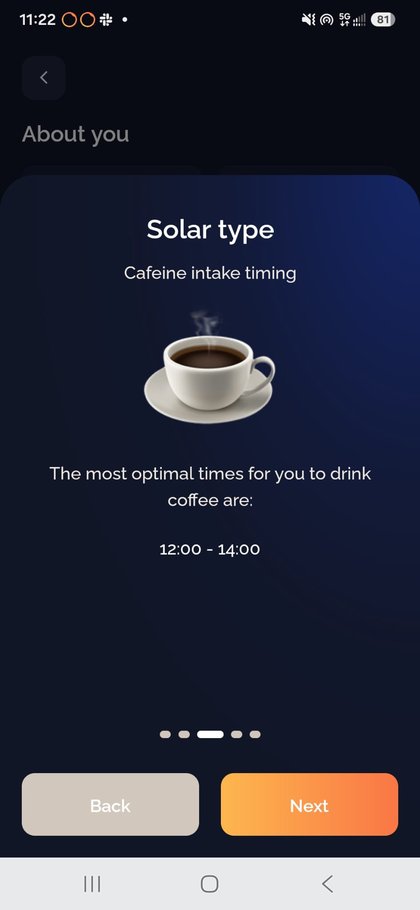
In my test, Kira told me to cut caffeine after 4 PM to protect my sleep and suggested winding down earlier. It also mapped my peak energy windows from my chronotype so I could schedule deep work at the right time. Apple gives you the raw library; Circular gives you a librarian.
Beyond sleep and recovery, the ring covers ground the watch doesn't: women's health with period and fertility-window prediction, hourly stress predictions, medication reminders, and EU-based servers that are GDPR and HIPAA compliant. Kira analyzes 140+ biomarkers across 13+ health features, the interior is hypoallergenic titanium, and the ring comes in four finishes. You can also earn Circular Coins by hitting your health goals. Apple's health stack is broad but general; Circular's is deeper on the signals that matter for long-term wellness.
The Circular Ring 2 is the only smart ring with ECG and 13+ core health features, with no subscription. Learn more
Apple Watch vs Circular Ring 2: Battery Life
Winner: Circular Ring 2
The Apple Watch lasts up to 24 hours on a charge, or 38 hours in Low Power Mode, and charges to 80% in about 30 minutes. In practice I still charged it every single day, because a watch that's nearly empty at bedtime won't survive the night.
The Circular Ring 2 lasts up to 8 days in Eco mode, and about 6 days in my use with continuous SpO2 and temperature tracking on. When it does need power, you drop it into its case, which has a built-in battery, and it's full in 30 minutes. Over the month I charged the watch daily and the ring four times. One of these I could sleep in every night; the other I couldn't.
Apple Watch vs Circular Ring 2: Pricing
Winner: Circular Ring 2
- The Apple Watch Series 11 starts at $399 for the 42 mm GPS model.
- Cellular connectivity starts at $499, plus a carrier plan.
- AppleCare+ adds a monthly fee on top.
- The Circular Ring 2 costs $349, once.
On subscription, I want to be precise. The 13+ core Circular features, ECG, continuous SpO2, sleep tracking, and Kira's daily insights, are free with the ring. A small set of premium features uses a freemium model with a separate fee. The watch, by contrast, requires an iPhone and, for cellular, a plan.
Apple Watch vs Circular Ring 2: Verdict
If you want a second phone on your wrist, get the Apple Watch. It's the best real-time workout companion and notification hub you can buy, and its sleep and health tracking have genuinely improved.
If you want to understand your health over time, get the Circular Ring 2. It collects more data because you never take it off, and it presents that data as advice rather than a spreadsheet.
I found the two devices complementary, not interchangeable, and definitely not integrated. They don't sync with each other. Wearing both worked for me because they covered different gaps: the watch handled live workout metrics and notifications, the ring handled overnight recovery and long-term trends. The overlapping metrics, heart rate and HRV, generally agreed, which made the duplication feel redundant on some days. Whether that redundancy is worth roughly $750 total depends on how much you care about sleep data specifically. If you only want one, pick the device that matches the problem you actually have.
Doe de quiz: ontdek hoe je ervoor staat
Vaak Gestelde Vragen
Q: Can the Circular Ring replace my Apple Watch?
A: For sleep, recovery, and 24/7 health trends, yes, and it does it better because you wear it all night without charging. For live workout data, notifications, and apps, no, the Apple Watch is still the better tool.
Q: Does the Circular Ring work with Apple Health?
A: Yes. Circular syncs heart rate, HRV, SpO2, sleep stages, and respiratory rate to Apple Health, so your data stays in one place.
Q: Is the ECG on the ring as accurate as the Apple Watch?
A: Both are single-lead ECGs cleared by the FDA (Circular's is an FDA-cleared algorithm). In my test both matched a chest strap within 1-2 BPM. The ring's edge is trend detection, since it's worn continuously.
Q: Which is better for sleep tracking?
A: The Circular Ring 2, but not because the Apple Watch can't do it. The watch tracks sleep stages natively. The ring wins because it's always on your finger, so it never misses a night to charging.
Q: Do I need a subscription for the Circular Ring?
A: The 13+ core features are free with the ring. A small set of premium features uses a freemium model, so those carry a separate fee, but the essentials are included in the purchase price.
Q: Is Apple a health company?
A: Apple is a consumer electronics company; health is one feature of a much broader product. Circular is a dedicated health-technology company, and the entire experience, form factor, app, and AI coaching, is built around that single purpose.
Bronvermeldingen
- Apple Watch Series 11 Technical Specifications, Apple Inc.
- Circular Ring 2 Product Page, Circular.
- Journal of Medical Internet Research (2023): PPG sensor accuracy by body site