Kenmerken
Winkelen
Ondersteuning
Bedrijf en partners
%201-1.avif)
Ronde ring 2
$349 · Geen verplicht abonnement.
kopen↗Kenmerken
Winkelen
Ondersteuning
Bedrijf en partners
$349 · Geen verplicht abonnement.
kopen↗De ring registreert de vorm van je polsgolf aan je vinger en houdt bij hoe je bloeddruk zich in de loop van dagen en weken ontwikkelt. Hij is ontworpen om je een trend te laten zien ten opzichte van je eigen kalibratie — niet om een bloeddrukmanchet te vervangen, en niet om je een diagnose te geven.
Je avondwaarden liggen hoger dan je ochtendwaarden. De vijf dagen met waarden in de ‘Elevated’-categorie of erger vielen allemaal in één week, en ze volgden allemaal op een late training.
Geschatte systolische waarde · 30 dagen
116mmHg vandaag · streefwaarde onder de 120
Dagen binnen de doelstelling
21 van 30
Verhoogd
4
Fase 1
1
Elke afzonderlijke schatting bevat een foutmarge. Als je de resultaten van een maand lang, afgezet tegen je eigen kalibratie, bekijkt, kun je zien of je waarde stijgt of daalt — en dat is de vraag die je jezelf tussen twee kliniekbezoeken door het beste kunt stellen.
130 over 71 is verhoogd, niet normaal. De waarde wordt bepaald door het hoogste van de twee getallen; een goede diastolische waarde compenseert dus nooit een verhoogde systolische waarde. Dit is een bewuste aanpassing van de manier waarop de eerdere app deze twee waarden interpreteerde.
De definities van de banden zijn gebaseerd op de drempelwaarden die in de klinische praktijk gangbaar zijn. De app geeft je band weer; hij geeft er geen interpretatie bij.
Voer drie metingen in die zijn verkregen met een goedgekeurde manchet voor thuis- of klinisch gebruik, gemeten in rust. Hierdoor wordt het model afgestemd op uw eigen slagaders in plaats van op een gemiddeld paar slagaders.
De vorm van de polsgolf, de doorlooptijd en de hartslag worden samen geanalyseerd en vervolgens afgestemd op je referentiepunten, zodat de schatting op concrete gegevens is gebaseerd.
De app vraagt regelmatig om een nieuwe meting via de manchet, en telkens wanneer je fysiologische toestand in rust zodanig verandert dat het de moeite waard is om de pasvorm te controleren.
De polsdruk — het verschil tussen die twee — is iets wat de meeste mensen nog nooit hebben gezien, en deze verandert in de loop van jaren, niet van dagen, samen met de arteriële stijfheid.
Circular geeft inzicht in de patronen in uw eigen schattingen. Het stelt geen diagnose van hoge bloeddruk en is geen vervanging voor een bloeddrukmanchet of voor medisch advies.
Nee. Het geeft de ontwikkeling van je bloeddruk weer tussen de metingen met de manchet door. Elke beslissing over medicatie of behandeling moet worden genomen op basis van een gevalideerde manchet en door een arts.
Om te voldoen aan de klinische normen voor medische toepassingen moet een monitor een gemiddelde afwijking van maximaal 5 mmHg hebben, met een standaardafwijking van niet meer dan 8 mmHg.
De Circular Ring 2 voldoet aan die eis, maar er hangt wel veel af van de kalibratiefase.
Hieronder staan alle factoren die het aflezen kunnen verstoren, zelfs met manchetten
1. Factoren met betrekking tot uitrusting en techniek
2. Houding en rust
Optische sensoren meten de vorm en het ritme van je hartslag, niet de druk zelf. De metingen van de manchet geven het model informatie over wat die patronen in je lichaam betekenen — slagaders verschillen zo sterk van persoon tot persoon dat een algemene kaart niet voldoende is.
De app geeft je een melding en vraagt eerder of je hartslag in rust of je basistemperatuur is veranderd. Het is altijd de moeite waard om je gegevens opnieuw te kalibreren na een wijziging in je medicatie of een langdurige ziekte.
Het systeem voert overdag en ’s nachts metingen uit en rapporteert vervolgens een dagelijkse schatting met de bijbehorende spreiding. Het is geen continue meting en pretendeert dat ook niet te zijn.
Nee. De bloeddruktrends worden, net als alle andere meetwaarden, permanent bij de ring opgeslagen.
Volgende
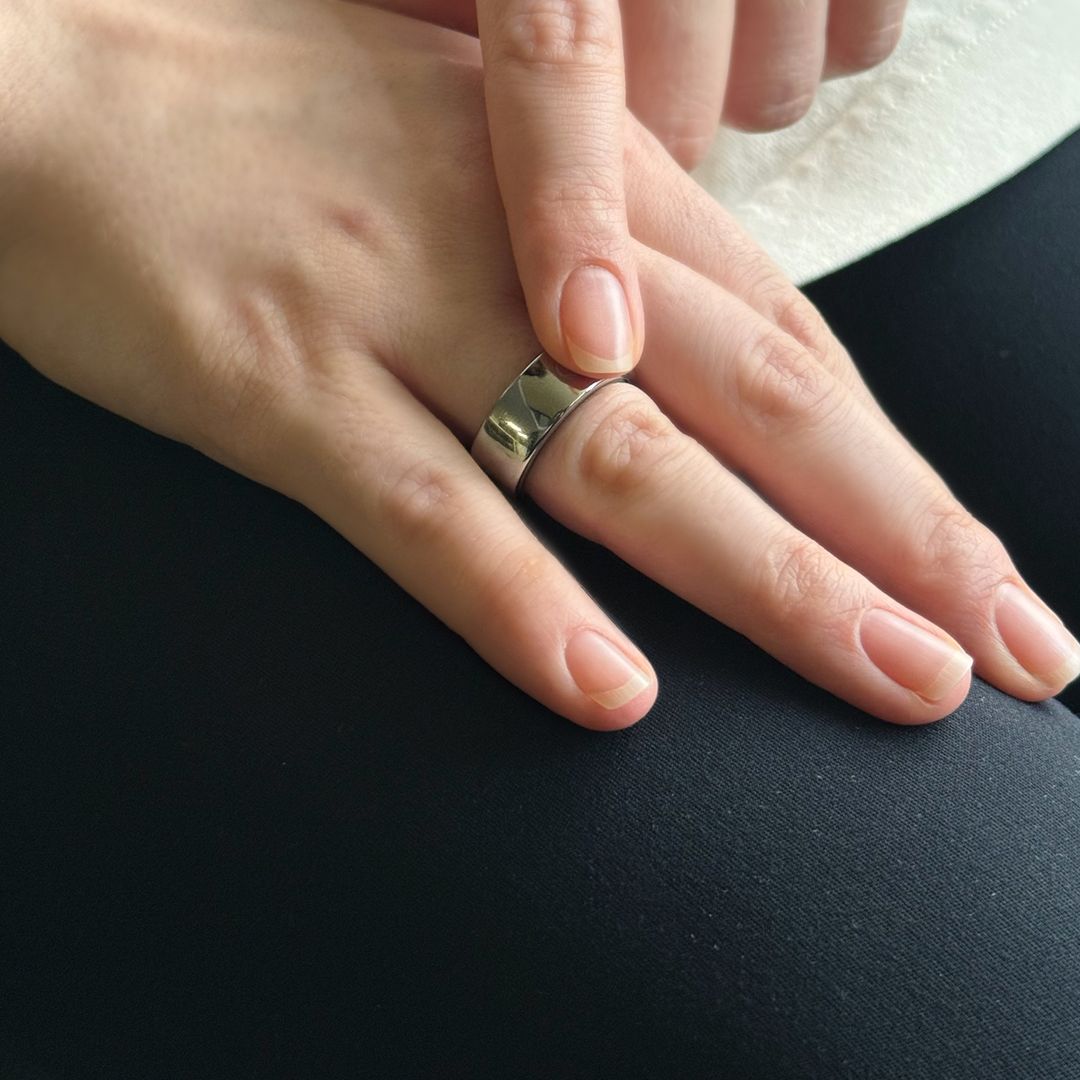
Kalibreer het eenmalig, draag het en laat de gegevens zich opbouwen.
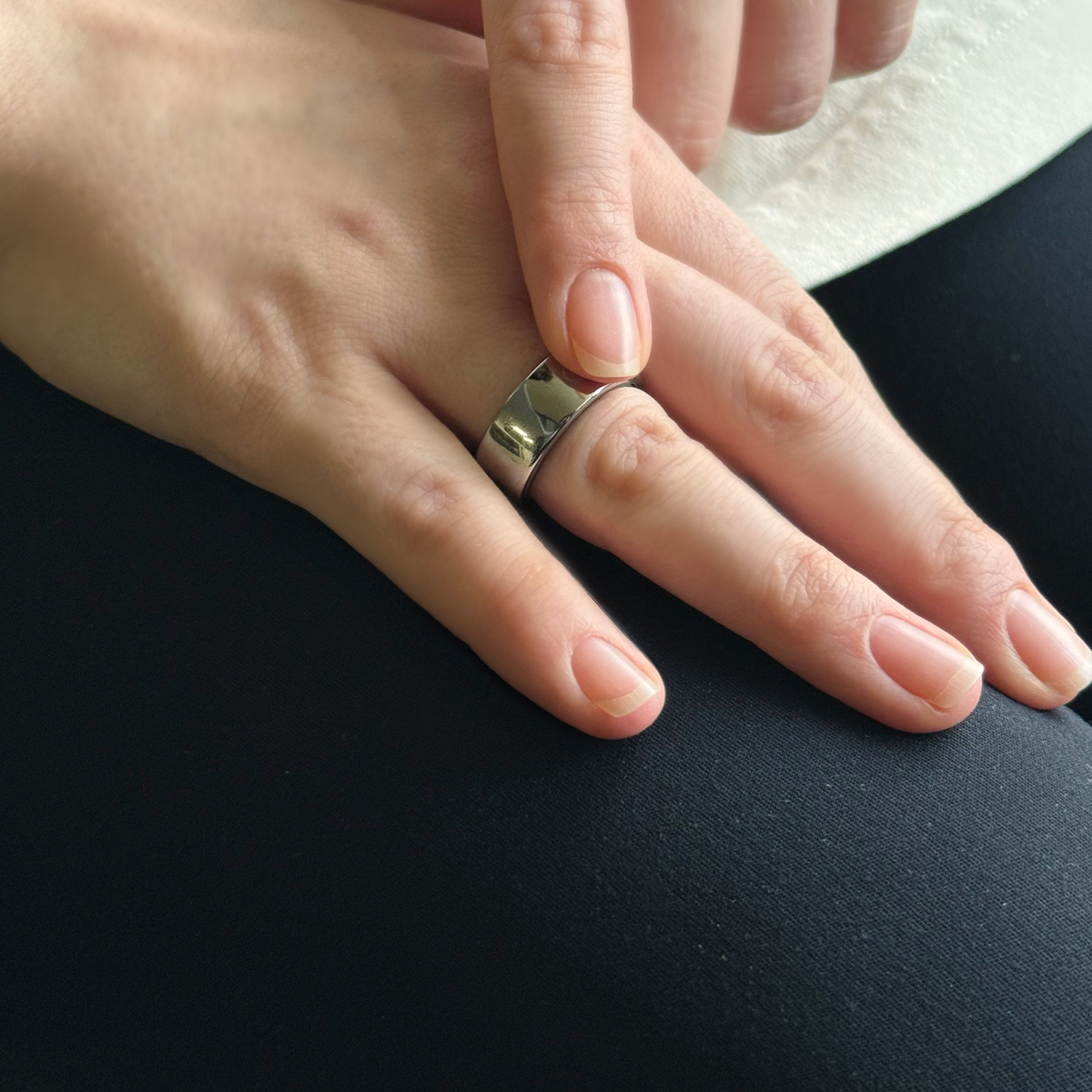
Leer jezelf kennen. De cirkel is rond.
Kalibreer het eenmalig, draag het en laat de gegevens zich opbouwen.